
Lithium-ion battery fire: why it starts and how to stop it
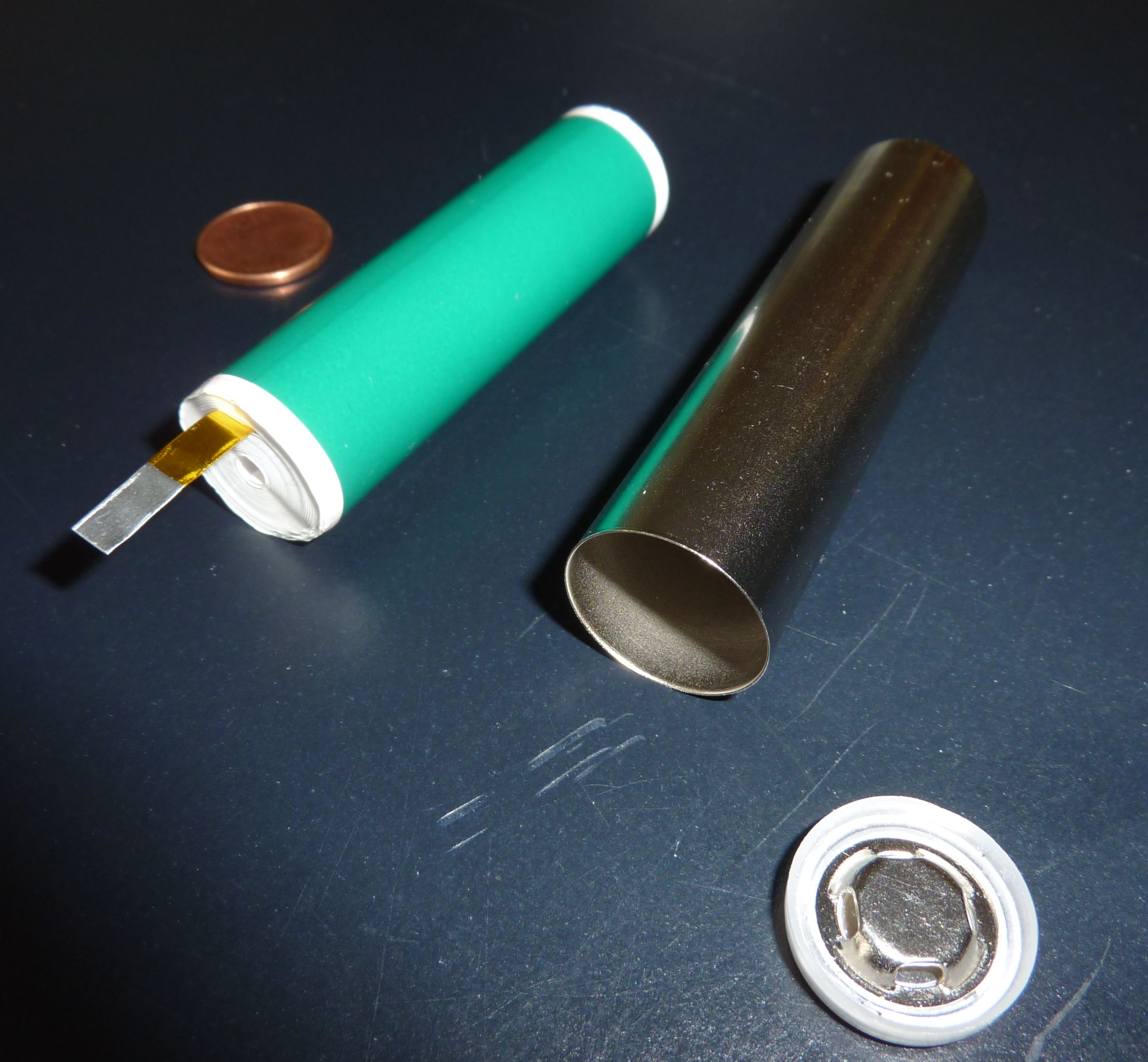

A lithium-ion battery fire does not behave like a fire of wood or petrol. The battery carries fuel, heat and its own oxygen in one sealed package, so the fire needs no air from outside and cannot be smothered. It starts inside, in a cell that overheats, and spreads from cell to cell as long as there is something left to burn. This article explains how that happens, which gases come out, why powder and CO2 do not help, what water really does, and how to lower the risk at home and in a fire station.
How a lithium-ion battery fire starts: thermal runaway
A lithium-ion cell is a sandwich of anode, separator and cathode, wound or stacked into a can or a pouch and soaked in a flammable electrolyte. While it works as intended, the chemical reactions inside release a little heat and the casing carries it away. Thermal runaway begins when that balance flips: the reactions produce more heat than the cell can pass to its surroundings, so the temperature rises on its own and speeds up the very reactions that raise it.
The trigger can be anything that heats the cell locally: an internal short circuit from damage or a manufacturing defect, overcharging, charging too fast in the cold, external heat or an impact. The thresholds depend on the cell chemistry, but the sequence is always the same.
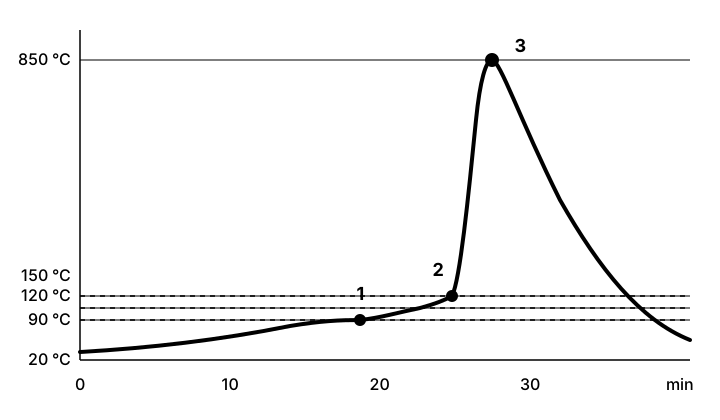
Around 90 °C the protective layer on the anode (the SEI) starts to break down, which releases heat and pushes the temperature further. Above 120 °C the polymer separator melts and the electrodes touch, creating a short circuit inside the cell. From about 150 °C the cathode decomposes and releases oxygen. From that moment the cell burns from within, with no need for air, and tests on standard 18650 cells have measured temperatures up to 850 °C (Golubkov et al., 2014).
One cell in runaway heats its neighbours. An e-bike or power tool battery holds dozens of cells, a car thousands, and that spreading is what makes the fire long and hard to put out.
Why the state of charge decides
A full battery is more dangerous than an empty one. Tests on 18650 cells showed that cells must be charged above a certain threshold to go into thermal runaway at all, and the higher the state of charge, the lower the temperature at which runaway starts and the higher the peak temperature and the amount of gas (Golubkov et al., 2015). An overcharged battery is the worst case. This is also why batteries are stored and shipped partly charged, not full.
What comes out of a burning battery
The smoke from a lithium-ion battery is not ordinary smoke. A cell in runaway vents a large volume of gas: in tests up to a quarter of a mole per 18650 cell, several litres from a single finger-sized cell. The main components are carbon dioxide, carbon monoxide and hydrogen, a mixture that is toxic and flammable at the same time (Golubkov et al., 2018). When that gas collects in an enclosed space and finds an ignition source, the result is a flash or an explosion before anything catches fire in the usual sense.
Then there is hydrogen fluoride (HF). The electrolyte contains fluorinated salts, and in a fire they yield HF: measurements on seven types of commercial batteries gave 20 to 200 milligrams of HF per watt-hour of capacity (Larsson et al., 2017).
For a 500 Wh e-bike battery that is on the order of 10 to 100 grams of a gas that attacks the eyes, the skin and the airways. That is why nobody enters a room with a smoking battery without a breathing apparatus, and people are led out upwind, not downwind.
Why powder and CO2 do not help
Powder and carbon dioxide extinguish by interrupting the chain reaction of the flame or by displacing oxygen from the air. Thermal runaway needs neither: the oxygen comes from the cathode and the heat from the cell itself. Powder or CO2 can briefly put out the flame of the escaping gas, but the cell keeps heating and reignites as soon as the cloud disperses. The same goes for fire blankets: they stop the fire spreading to the surroundings, they do not extinguish the battery, and in an enclosed space they can hold the gas until it deflagrates (UL FSRI).
This is why lithium-ion batteries belong neither to class B nor to class D. Lithium metal, used in some non-rechargeable batteries, is class D and is fought with a special powder, but a lithium-ion cell contains no lithium metal. The standard ISO 3941:2026 introduced a new class L for them, which has not yet entered the European extinguisher standards, so no portable extinguisher carries that mark yet. More in the article on classes of fire.
What really works: water and time
The only thing that stops thermal runaway is cooling the cells below the temperature at which the reactions sustain themselves, and for that water is still the best agent: it has the highest heat capacity, there is enough of it, and it needs no additives (UL FSRI). The problem is not the agent but the access. The battery sits in a casing that keeps water away from the cells, so a stream on the outside of the pack cools the sheet metal, not the source of the heat. Researchers put it plainly: water that does not reach the cells does not cool them, and that is why the battery reignites later (UL Research Institutes).
Three tactics follow from that, and fire services use them today.
A small battery that can be moved, such as one from an e-bike, a scooter or a power tool, is knocked down with water and cooled until the smoke settles, then isolated where possible: taken outdoors and submerged in a container of water, or sealed in a metal container with an inert filler. Submersion cools the cells a stream could not reach and drains the remaining energy at the same time.
A large battery that cannot be moved, such as one in a vehicle, is allowed to burn out while the surroundings are protected. Water goes onto what can be saved and onto neighbouring objects, and onto the pack only if it really reaches the cells. A vehicle left to burn freely goes out by itself in about an hour and a half (UL FSRI).
In both cases “stranded energy” remains after the fire: cells that did not burn are still charged and damaged, which means a risk of electric shock and of a new thermal runaway hours or days later (NTSB). The researchers’ advice is simple: unless the battery has obviously burned out completely, assume it can reignite, watch for smoke, sounds and rising temperature with a thermal camera before releasing the scene, and keep the remains outdoors, away from anything flammable.
How to lower the risk at home and in the station
Most lithium-ion battery fires in homes start at the charger. The rules fire safety organisations recommend come down to a few habits (NFPA):
- Buy devices, batteries and chargers tested by an independent laboratory, and charge only with the charger that came with the device. A cheap replacement charger without voltage control is the most common cause of overcharging.
- Charge while someone is awake and nearby, and unplug when the battery is full. Do not charge overnight or in the hallway you would escape through.
- Do not charge on a bed, a sofa or next to a heater, and do not charge a battery that is cold from a ride in freezing weather until it has warmed to room temperature.
- Stop using a battery at once if it has swollen, changed colour or shape, gets hot, smells or will not take a charge. Take it outdoors, away from the building, and do not put it in household waste.
- If a battery starts to hiss, smoke or crackle, leave the room, close the door and call the fire service. There is no point trying a powder extinguisher.
In a fire station the same applies to the batteries of tools, radios and thermal cameras: charge on a non-combustible surface, away from vehicles and equipment stores, and dispose of damaged cells instead of keeping them “just in case”.
Frequently asked questions
Can a lithium-ion battery fire be put out with water? Yes, and water is the best thing we have, provided it reaches the cells. Plenty of water and long cooling, and submersion for small batteries. Electric shock from a small battery is not a hazard; high-voltage batteries in vehicles and energy storage have their own procedures.
Why did the battery reignite hours after it was put out? Because the extinguishing did not cool every cell. The ones that stayed charged and damaged kept heating until they reached the runaway threshold. That is why the remains are kept outdoors and watched.
Is it dangerous to breathe the smoke from a battery? Yes. Besides carbon monoxide it contains hydrogen fluoride, which attacks the airways and the skin, and hydrogen, which is explosive. Leave the space, and enter only with a breathing apparatus.
Does a fire blanket help? It protects the surroundings from flames and sparks, but it does not extinguish the battery, because the battery needs no air. Indoors it can trap flammable gas, so it is used only outdoors and together with cooling.
May I put a swollen battery in water? For small batteries, submersion in a container of water outdoors is an accepted way to discharge them safely before disposal. The container must be large enough and the battery fully under water.