
Classes of fire A, B, C, D and F: what burns and what puts it out
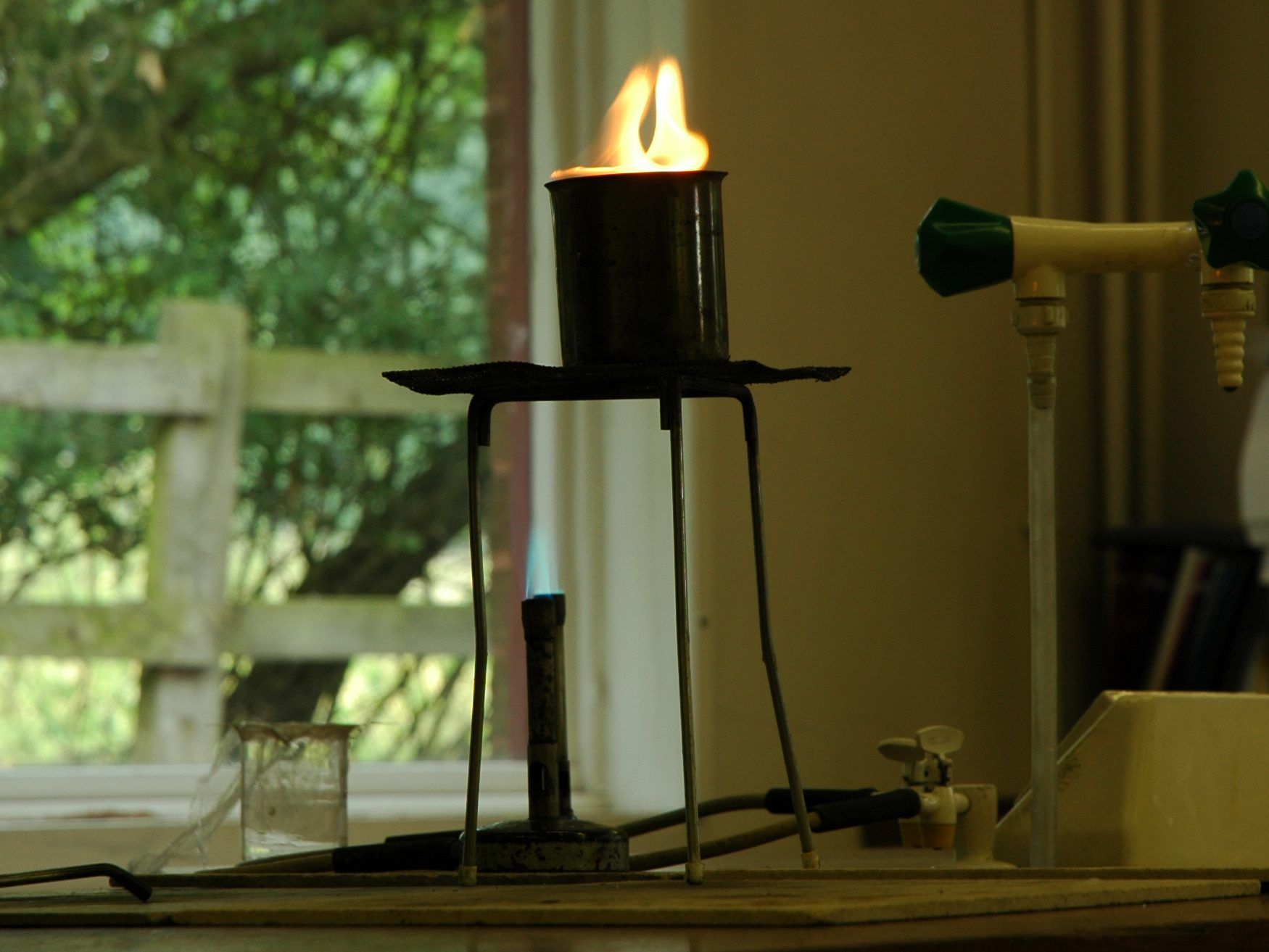

Not every fire is put out the same way. Water extinguishes wood, feeds burning oil and explodes on burning metal. That is why fires are sorted into classes by what is burning, and why extinguishing agents and extinguishers carry the letters of those classes. Anyone who understands five letters knows which extinguisher to pick up and which to leave alone.
The five classes of EN 2
The European standard EN 2 sorts fires by fuel. The original 1992 edition had four classes, A to D, and class F was added later for cooking oils and fats.
| Class | What burns | Examples |
|---|---|---|
| A | solids, usually organic, burning with flame and embers | wood, paper, textiles, straw, coal, many plastics |
| B | liquids and solids that melt into liquids | petrol, diesel, alcohol, varnish, paraffin, wax |
| C | gases | propane, butane, natural gas, hydrogen, acetylene |
| D | metals | magnesium, aluminium powder, sodium, potassium, lithium, titanium |
| F | cooking oils and fats in cooking appliances | deep fryer, frying pan, roasting kettle |
There is no E in the table and L is not in the standard yet. Both have a reason, explained below.
Class A: solids
This is the most common fire. Wood, paper, textiles and most plastics burn with flame at the surface and embers deep inside. Extinguishing has to kill the flame and cool the embers, or the fire comes back.
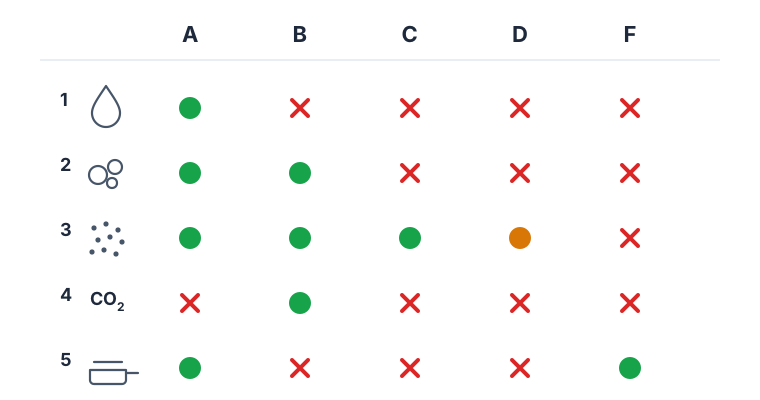
Water is the best agent because it cools. One litre of water takes about 2.3 MJ of heat with it as it evaporates, more per kilogram than any other common agent. Foam, ABC powder and wet chemical also work on class A. Carbon dioxide does not cool enough and does not reach the embers, so it never carries an A rating.
Class B: liquids
Liquids do not burn themselves. Their vapour above the surface burns. A class B fire is therefore put out by covering the surface and cutting it off from the air, not by cooling. Foam forms a blanket that smothers the flame and stops new vapour. ABC and BC powders interrupt the chemical reaction in the flame, and carbon dioxide displaces the oxygen.
A solid jet of water is dangerous: water is denser than most flammable liquids, sinks beneath them and spreads the burning liquid across the floor. A fine spray can cool the surroundings and the tank, but it does not put out the pool itself.
Class B also covers substances that melt into liquids when heated, such as paraffin, wax and some plastics. Cooking oils and fats are excluded and have their own class F.
Class C: gases
Gas escaping from a cylinder or pipe and burning behaves like a burner. The flame can be put out with powder, but that is rarely a good idea: the gas keeps flowing, mixes with air and forms an explosive mixture waiting for the first spark.
The rule for class C is: shut off the supply first. While the gas burns, you know where it is and what it is doing. Extinguish only when the supply cannot be shut off any other way, and then remove every source of ignition immediately. Cooling the cylinders and nearby tanks with water is the priority, because a heated cylinder can burst. EN 3 defines no test fire for class C, so a C rating on an extinguisher rests on a powder that already holds an A or B rating.
Class D: metals
Metals as powder, swarf or thin sheet burn at 2000 °C and above. At those temperatures water splits into hydrogen and oxygen, and both burn. A jet of water on burning magnesium swarf causes an explosion. The same goes for foam, because it is mostly water. Ordinary ABC powder can react with some metals and make the fire worse.
Class D has its own D powders, usually based on sodium chloride or graphite, applied slowly to form a crust over the metal. In an emergency dry sand or cement helps, but only if completely dry, because moisture in the sand flashes to steam and throws burning fragments around. Class D extinguishers fall outside EN 3 and have no standard pictogram, so they are chosen for the specific metal to be protected.
Lithium metal is class D. Lithium-ion batteries contain no lithium metal and do not belong here. They are covered below.
Class F: cooking oils and fats
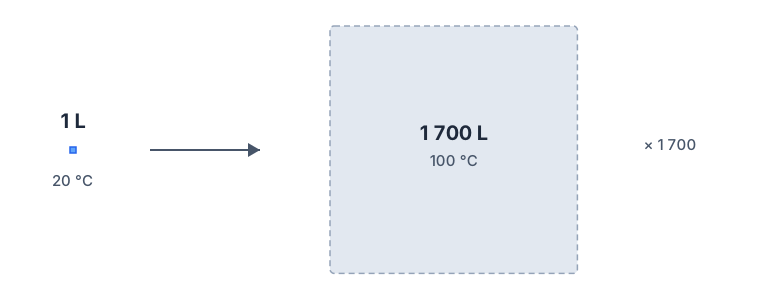
Oil in a fryer or pan ignites by itself at about 300 to 350 °C. The first step is therefore to switch off the heat. Water is the worst possible choice here. Water is denser than oil, sinks to the bottom of the pan, evaporates instantly and expands about 1700 times as it does. That steam throws the burning oil out of the pan as a fireball that can engulf the whole kitchen.
Class F has its own agent, wet chemical. It is a solution of potassium salts that forms a soapy crust on the hot oil. The crust seals the oil from the air and cools it, so it cannot reignite. Powder and carbon dioxide cannot carry an F rating under EN 3, and a pressurised jet of CO2 can splash burning oil around. Foam extinguishes, but it gets no F rating because it is mostly water and can do what water does if applied roughly.
A small pan fire is put out most safely with a lid or a fire blanket, then left to cool without moving the pan.
Why there is no class E
Older schemes had a class E for fires in electrical equipment. EN 2 dropped it for a simple reason: electricity is not a fuel but a source of ignition. What burns in a switchboard is plastic and insulation, which is class A, or oil in a transformer, which is class B. Once the power is off, the fire is fought like any other of its class.
Instead of a class, the extinguisher label states whether it has been tested for use on live equipment. The typical marking reads: suitable for equipment up to 1000 V from a distance of 1 m. Powder and carbon dioxide do not conduct, and water-based extinguishers pass the test only if the spray is fine enough. An extinguisher without that marking must not be used while the equipment is live.
Lithium-ion batteries and class L
A failing lithium-ion battery goes into thermal runaway: one cell overheats, ignites its neighbour, and so on down the pack. The battery releases flammable gases and some of its own oxygen as it goes, so smothering does little. Powder and carbon dioxide put out the flame for a moment, but the reaction inside the cells continues and the fire returns. Class D agents do not help because there is no lithium metal in the battery.
The only thing that reliably works is cooling with large amounts of water, for a long time, and watching the battery afterwards, because it can reignite hours or days later. Small batteries are best submerged in water. Large ones, in a vehicle for example, are cooled from the outside and kept under observation.
The international standard ISO 3941, in its January 2026 edition, introduced a new class L for these fires. It covers lithium-ion cells and batteries without lithium metal. Class L has not yet entered the European standards EN 2 and EN 3, so for now no portable extinguisher carries an L rating. The agents that manufacturers offer for batteries have no common test standard, so their labels should be read with care.
Same letters, different meaning
The letters are not the same everywhere. The American standard NFPA 10 uses A, B, C, D and K: there C is a fire in electrical equipment, K is cooking oils, and gases fall under B. Australia and New Zealand use the European letters A to F and mark electrical risks with an E in brackets. Anyone reading an imported extinguisher or a foreign manual should first check which system it uses.
How to read an extinguisher rating
The label of an extinguisher shows pictograms of the classes it covers and a performance rating such as 13A, 55B or 75F. The number before the letter is the size of the test fire the extinguisher put out under EN 3:
- A: the length of a stacked wooden crib in decimetres. 13A means a crib 1.3 m long.
- B: litres of flammable liquid in a round tray. 55B means a tray holding 55 litres.
- F: litres of cooking oil. 75F means 75 litres of oil.
A higher number means a bigger fire and more agent. For classes C and D the standard defines no test fire, so there is no number. A pictogram with a red circle and diagonal bar means the extinguisher is dangerous on that class, not just ineffective.
Frequently asked questions
How many classes of fire are there? Five under EN 2: A (solids), B (liquids), C (gases), D (metals) and F (cooking oils and fats).
What is a class E fire? An old label for fires in electrical equipment. EN 2 does not have it, because electricity is not a fuel. Instead, the extinguisher states whether it may be used on live equipment.
What puts out a class F fire? Wet chemical, which forms a soapy crust on the oil, or a lid and a fire blanket. Never water.
What does ABC on a powder extinguisher mean? That the powder is tested for solids, liquids and gases. It is not suitable for cooking oils (F), and metals (D) need a special D powder.
Which class is a lithium-ion battery fire? None yet in the European standards. ISO 3941:2026 introduced class L, but no extinguisher carries that rating yet. It is fought by cooling with water and keeping watch.
Sources
- Fire classification, Wikipedia: https://en.wikipedia.org/wiki/Fire_classification
- Fire classes explained, Riskfire: https://riskfire.org.uk/fire-extinguisher-classes
- New fire class L, ANPI: https://www.anpi.be/en/news/new-fire-class-l
- EN 3-7:2004+A1:2007, portable fire extinguishers, standard preview: https://standards.iteh.ai/catalog/standards/cen/37701762-452f-4d46-9843-785342ff5ff1/en-3-7-2004
- Portable fire extinguisher selection guide, Eurofeu: https://www.eurofeu.org/files/Publikationen/TechnischePaper/2014_EUROFEU_PORTABLE_FIRE_EXTINGUISHER_SECTION_selection_guide_08th_Dec_2014.pdf
- Brandklasse, Baunetz Wissen: https://www.baunetzwissen.de/glossar/b/brandklasse-3202191
- Fire extinguisher ratings explained, Fire & Safety Centre: https://fireandsafetycentre.co.uk/blogs/news/fire-extinguisher-ratings-explained